Trackside with Ducati Lenovo Team at COTA
This past weekend, I received a unique invitation to spend time with the Ducati Lenovo Team at the Circuit of the Americas. Not to watch the race, I was invited a day early to watch and learn how the team uses the latest in Lenovo tech power to streamline Ducati’s horsepower on the track. During the MotoGP US Grand Prix, I sat trackside watching the team and the rest of the grid run practice laps to dial in their land rockets before the race.
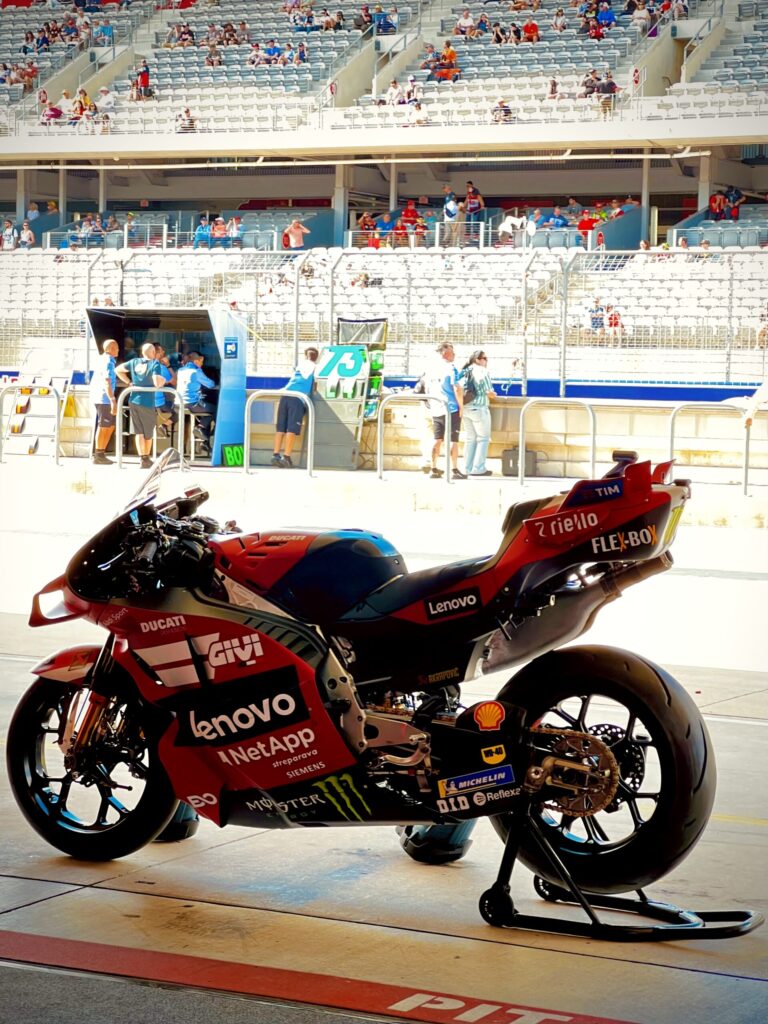
This was my first time experiencing MotoGP in person. One thing that caught me off guard, due to my ignorance, was the level of security involved. Security at COTA is tighter than a US embassy, with multiple checkpoints and dedicated staff ready to scan one of over a dozen different credentials, determining where you can and cannot enter.
But that’s only the beginning, the pits are an entirely different ordeal with each team constructing a literal maze of walls to prevent anyone’s wandering eye from seeing their mechanical 11 herbs and spices before the race.
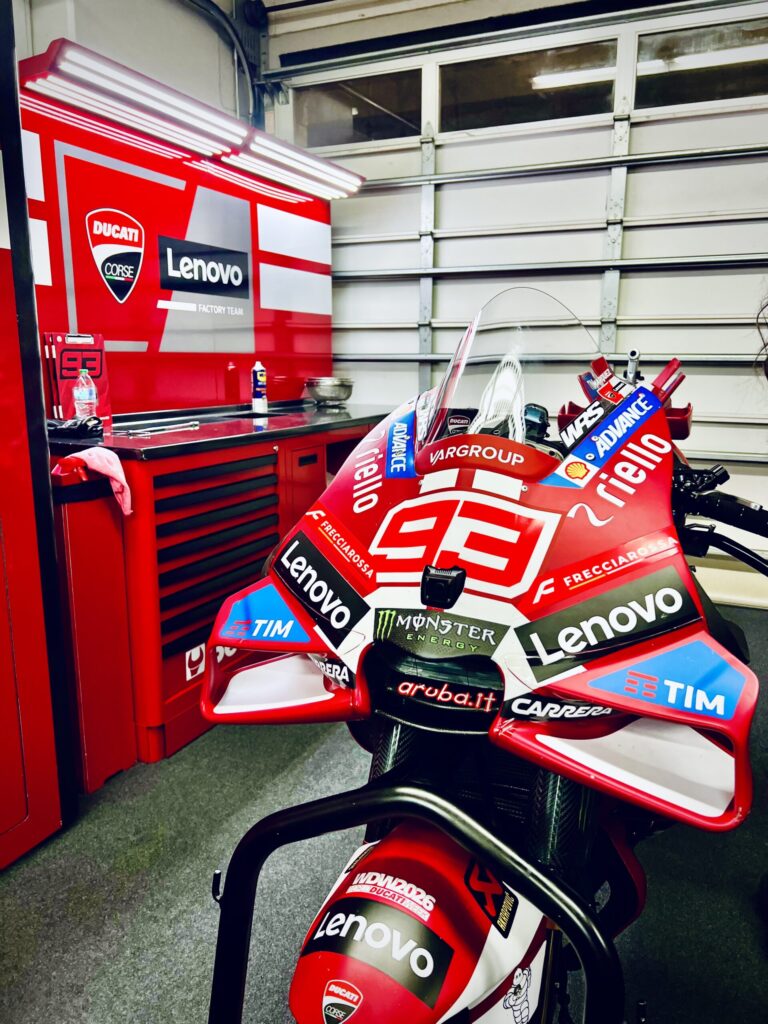
Usually, a media pass is a golden ticket that can get you anywhere and get away with taking video and photos of anything. Not here.
I was not allowed to take video of the garage while I was learning about the Ducati Lenovo MotoGP bikes. Nor was I allowed to post photos without the approval of the team’s organization, so the photos you’re seeing have been approved. Granted, it’s understandable why the teams go through such lengths to protect the secrets of their speed.
Lenovo’s Remote Garage
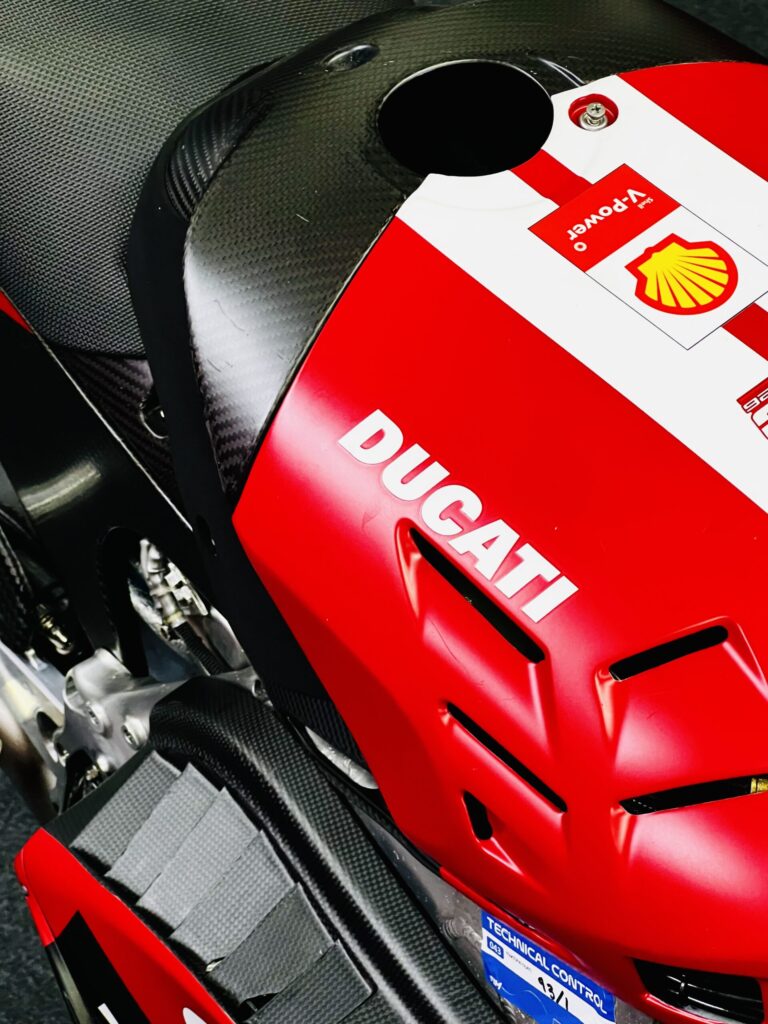
One detail we were allowed to see in depth was Ducati Lenovo’s Remote Garage. Every bike on the grid is loaded with cameras to capture the action, but what you won’t see are the dozens of sensors monitoring the bike’s vitals, gathering valuable information for engineers to make educated decisions while hunting for an extra tenth of a second advantage.
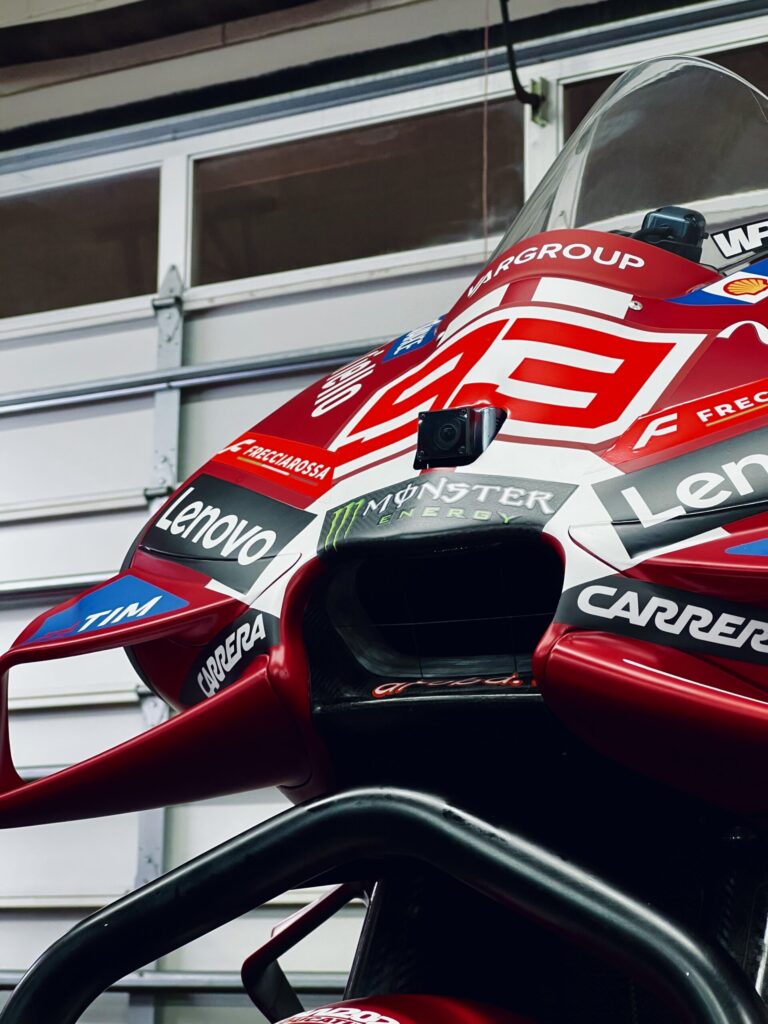
Ducati Corse began its partnership with Lenovo in 2018 and launched what it calls the Remote Garage in 2020. This innovative software puts a direct line between the rider, trackside engineers, and the engineers at HQ in Italy.
When a bike is brought into the pits, engineers will dive in with socket wrenches, and one will plug a wire into it to begin the download process. Lenovo’s Remote Garage processes the information, providing split-second data analysis of the bike’s engine performance, electronics, and environmental effects like Texas heat.
The Remote Garage can also create aerodynamic simulations and scenarios to help set up the bike since MotoGP has limited practice sessions before qualifying.
Ducati Lenovo Team at 2026 MotoGP US Grand Prix
One thing I noticed during my time in the garage with Ducati Lenovo Team is the ambiance. I’ve spent my fair share of time in garages, and they typically have the same soundtrack. Profanity being shouted, the ringing of metal tools falling onto cold concrete, power tools echoing off the walls, and music blaring from an ancient speaker covered in dust and paint overspray.
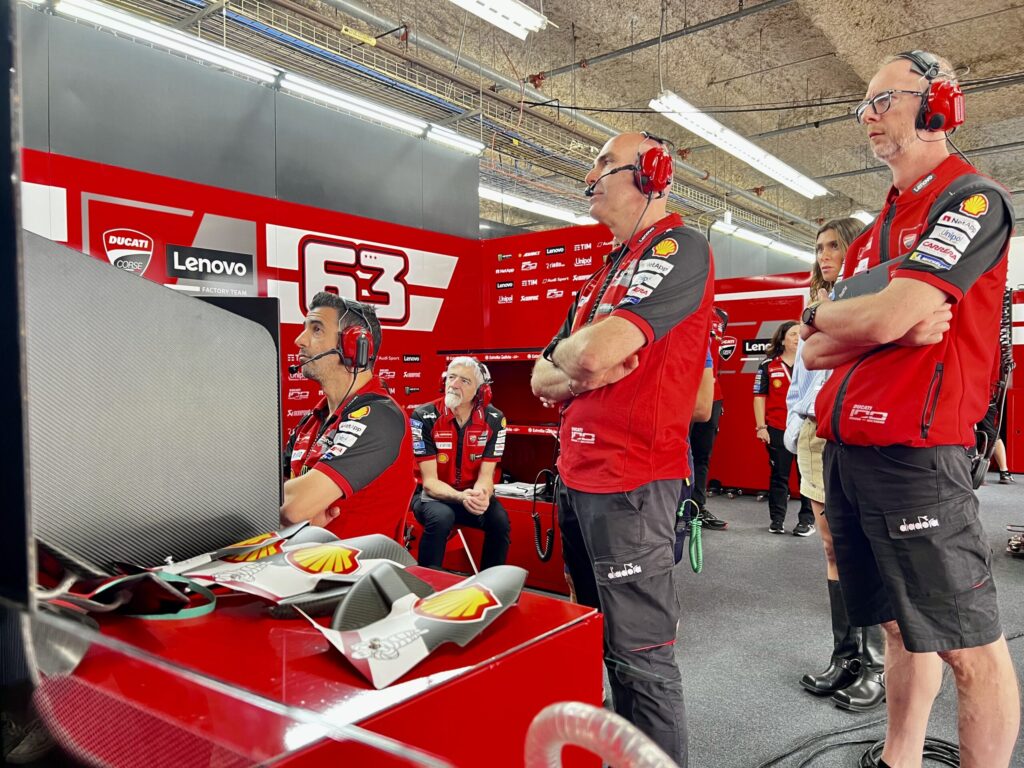
The Ducati Lenovo trackside garage was a surreal scene to witness. Four bikes were being worked on simultaneously, and it was quiet.
Nobody was talking, no music, no power tools. The only sounds I heard were the subtle ratcheting of socket wrenches and a vacuum cleaner running across the carpeted floor. Even the engineers looking through the data were stoic in tone, busy looking through the information. The entire team was running in sync. No need to talk when everyone knows exactly what needs to be done and how to go about doing it.
If only life were this organized.
Comments
Loading comments...
Failed to load comments. Please try again later.
Leave a Comment